
A Wee Break
On the road with Jane Dodd

I’ve been on a wee break. I don’t suppose anyone else has noticed. Ever since I broke my ankle at the start of the year, I haven’t had as much to say. At least not on Substack.
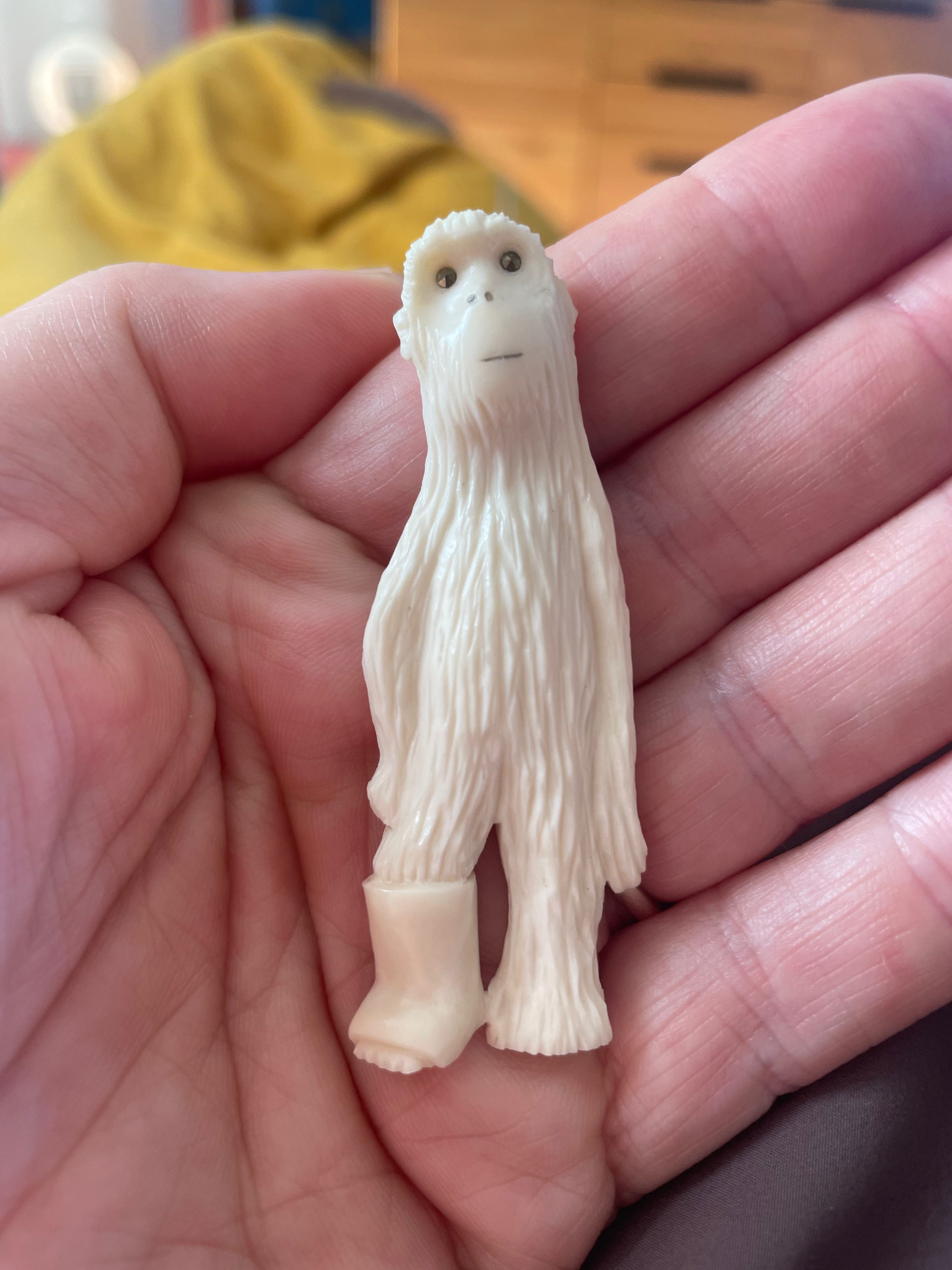
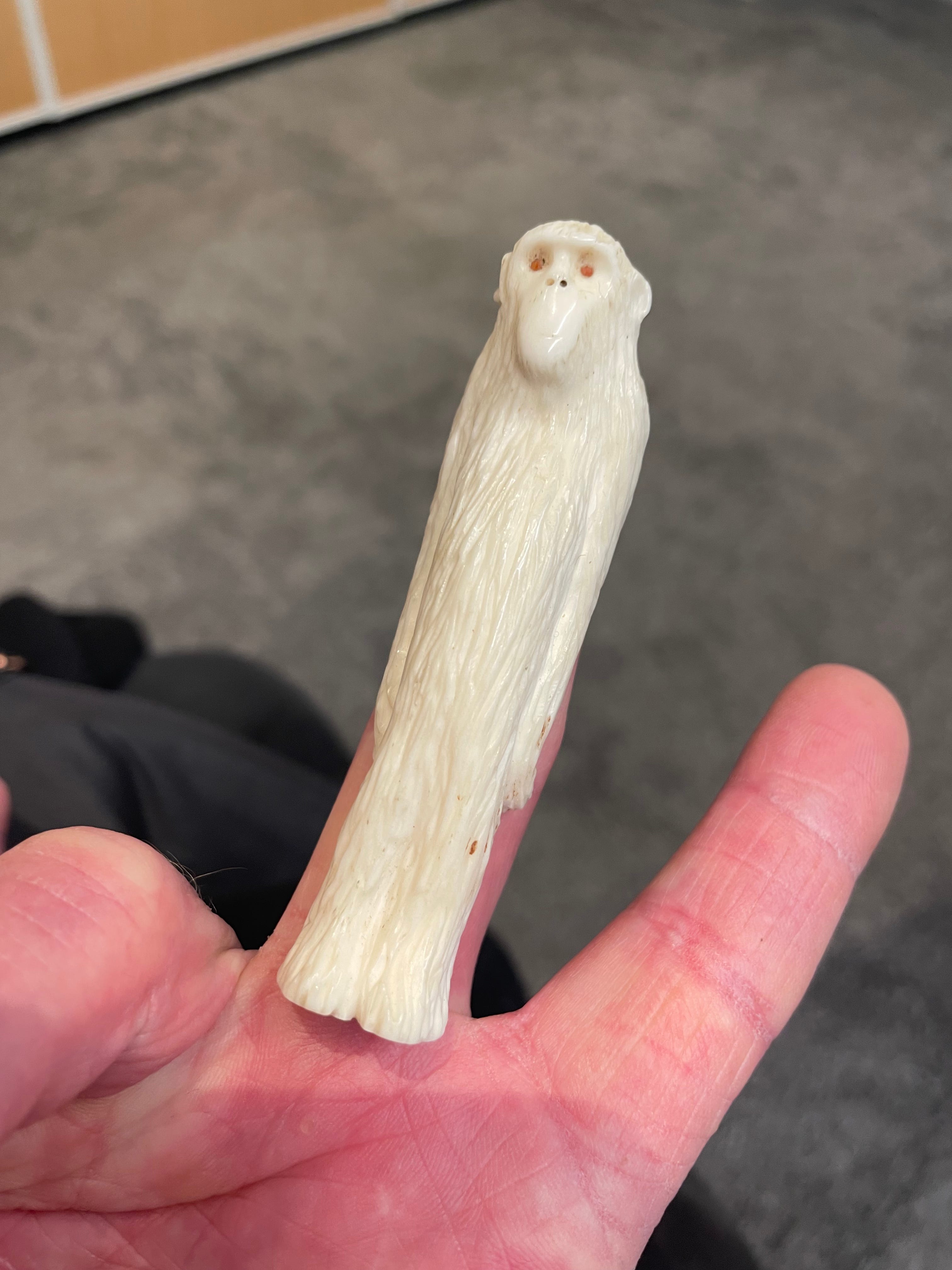
The first thing I did once I could walk again, was hobble down the stairs to the street in my moonboot and hitch a lift with Jane Dodd and her partner Martin to Whanganui. We were going to the opening of Messengers, a group exhibition I curated, that is informally known as ‘the animal show.’ That is because it has animals in it including a little polar ledge of Jane Dodd’s Unbels, short for unbelievables. The unbels are part Yeti, part polar bear, in my opinion at least. I couldn’t go past the unbels because they are anthropomorphic and sweet and made of cow bone. Jane told me an interesting story about buying the bone from a butcher, then boiling it and cleaving away the meat. Who doesn’t like to know the process?
In Messengers the unbels are a hunting party exhibited next to some old photos of polar bears in their fake arctic enclosures at the Auckland and Wellington zoos. The unbels gather around an intricate ribcage on the fire, made from ebony and dyed bone. They are carnivores, me too. I’ve always felt bad about it, but then I think we do tend to romanticise nature, as some utopia, when lots of animals eat other animals. Some plants even eat animals. There is no safe place, where no wrong is done, no might exerted...anyway let’s not get into it here.
I like the bald human appeal of the unbels with their beseechingly small silver sterling eyes. In my show, one has a broken arm, another is pierced by a spear. Hunting ain’t easy, on the frosty savannah. I don’t know why we love to look at representations of animals but we do. One of the earliest humanoid figures is a lion man, carved out of mammoth ivory with a flint knife. It was found in a cave in Germany and is approximately 40,000 years old. The unbels are distant relatives of the Lion man.
The unbels are also part of their own ever-expanding genealogy. Dodd’s made tons of them. Like the Smurfs! I want to collect them and make a village or at least put together a sprawling family reunion. Imagine every single one Dodd has made, shoulder to shoulder, on a ledge. Jane says she never knows who will appear out of the bone, and with what expression. I pressed her on this, really, did you not know that one might be holding a duck? Or that one a lamb? Turns out, she does know a bit.
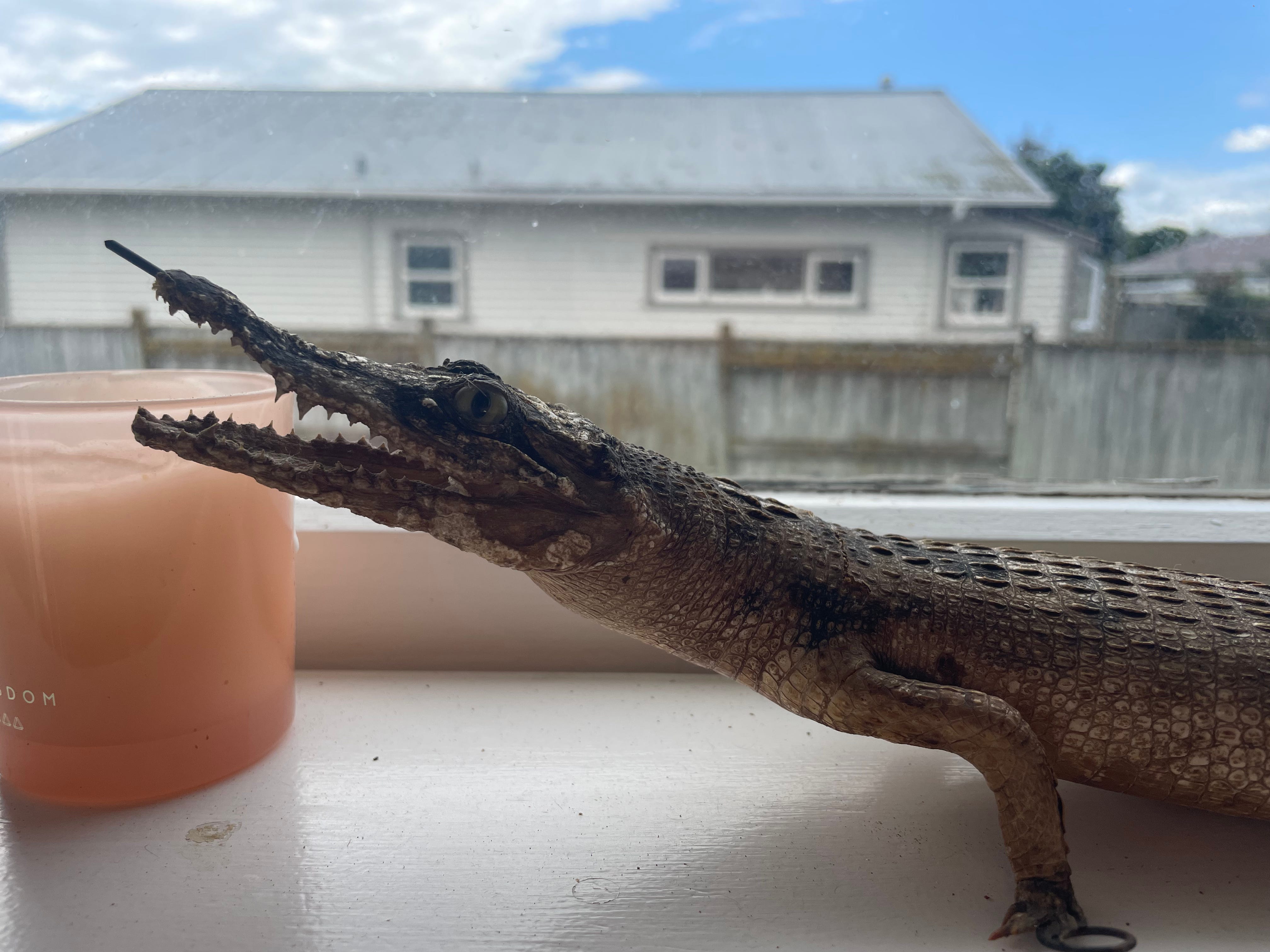
On the drive to Whanganui, we talked of gardening, and music, and her time in The Verlaines. Martin became a gardener after fifty. This led me into my fantasy about retraining as an art therapist...we stopped at Otaki to visit a musician friend of Jane’s, and when I stood up from the kitchen table and turned around, there was a taxidermied baby crocodile on the windowsill behind me. Great Scott! The crocodile had a metal rod poking out its open mouth. I was aghast but also delighted. “It must be a Johnstone’s crocodile,” I said. Still the knowledgeable child showing off to the adults.
I took a photo but daren’t pick it up.
John Berger wrote, “animals first entered the imagination as messengers and promises.” A beautiful quote that I have snapped up and used as a title for my exhibition. I have read his essay Why Look at Animals? several times, and though I know John Berger is probably intellectually surpassed, I still think it is a great essay.
Why look at animals? Well, because. When I first read Berger, I felt duly admonished that I had read, enjoyed and even loved stories led by anthropomorphic animals like Charlotte’s Web. Wilbur, some pig! I remember climbing down from my bunk bed, in tears and standing in the doorway of the lounge to solemnly announce, “Charlotte has died!” I was seven years old and in shock. Charlotte was the spider who wrote shimmering words in her cobweb that saved Wilbur the runt of the litter. Charlotte is a canny portrait of a writer. I am a writer, but I have never ever saved a pig. (Eaten a few.)
Berger argues that animals become the main characters in human stories, during the nineteenth century, as industrialisation takes hold and the reality of animals slips from our view. He doesn’t have a nice word to say about zoos either. Or the keeping of pets.
“Children in the industrialised world are surrounded by animal imagery: toys, cartoons, pictures, decorations of every sort.”
Berger is talking about me. I am sentimental about animals and about myself in relation to them. I am surrounded by animal toys. I still own a faded orange donkey called Donk, who is as old as I am. I have told my daughter I want to be buried with Donk. Or cremated. Does anthropomorphising animals belittle both them and us? Is it even avoidable? Do I have to forsake Donk? Stop liking our cat? Stop patting its deep black fur?
Look at the lion man, made all those years ago, big enough to hold in your hand, to stow in your pocket like a lighter. Carved by someone like Jane Dodd.
The photos and artworks I put into Messengers are about that very human impulse to love animals even as we kill and eat them. It’s a show for people who own artifacts and knick-knacks in the shape of animals. We project ourselves on to objects. We find salvation in our pets, take moments of refuge and quiet beside them. Pay countless vet bills. But as John Berger says their lives are marginal. We look at them, but they can’t look back. Unless meowing piteously with hunger. Or playing hide and seek under the duvet, staring out with wild yellow eyes…
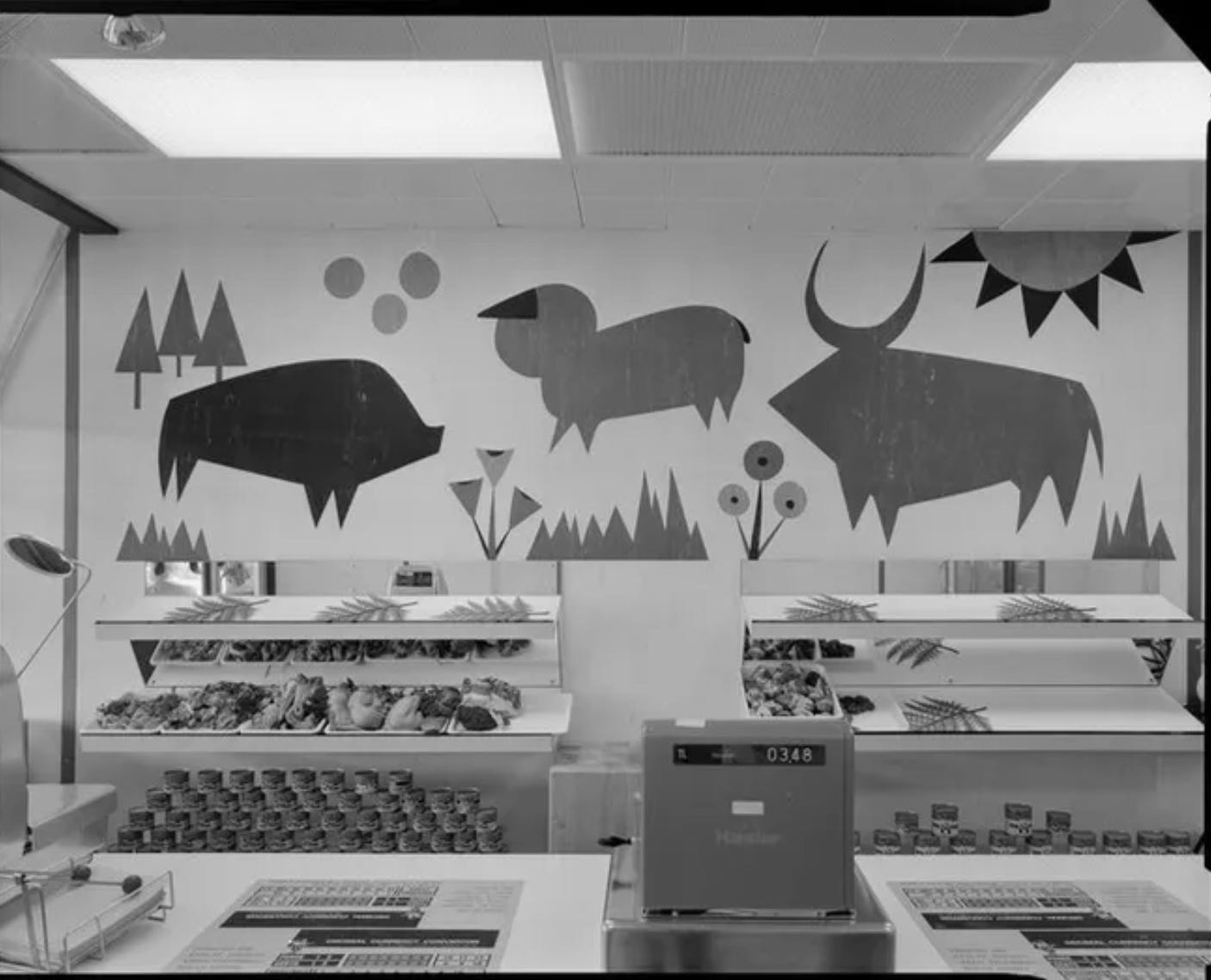
In my exhibition I included several old photographs from the National Library archive. I especially liked this one of Tonks Butchers shop. That mural! Berger eat your heart out. The mural is a modernist twist on the cave painting, and the animals romping across the wall are now carcasses of meat at our disposal. “The first subject for painting was animal,” John wrote. “Probably the first paint was animal blood.”
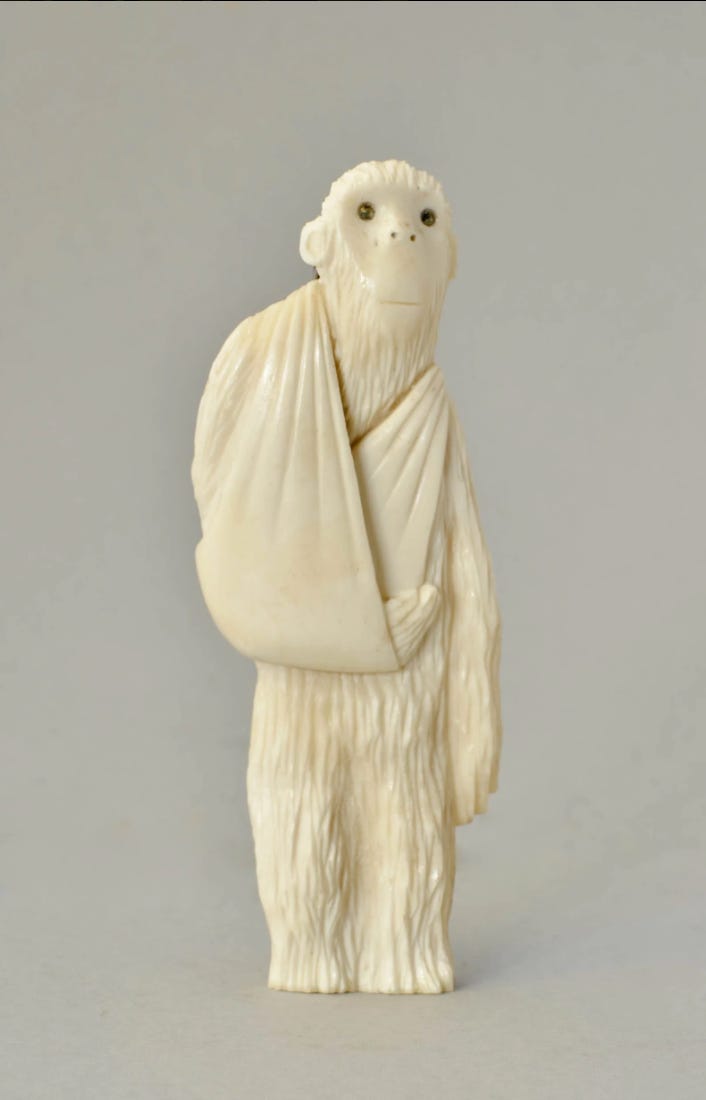
To err is human, but to be an Unbel is bovine.* Jane told me the unbel in the hunting party with a broken arm was a self-portrait because she often used to break her arm when she was young. Funny, because that one reminded me of the anthropologist Margaret Mead’s infamous quote about an ancient, healed femur being the first sign of civilisation. “Helping someone else through difficulty is where civilisation starts.” Margaret allegedly told this to a student, the early humanoid who helped fix the broken thigh bone was giving the other person a chance that animals with broken bones don’t have. Anyway, the quote isn’t true! Margaret Mead never said such a thing to a student. It’s just a sentimental feel-good story that makes us feel better about ourselves and civilisation.
We got to Whanganui and checked into the same hotel. I was staying a few doors down from Jane and Martin, who continued to be nice to me in my moonboot, helping out by loaning me a phone charger (of all the things to forget!) and taxiing me around. We did the opening. Messengers looking slick on black walls at the Sarjeant. We got through the opening day panel talk. In the afternoon, Jane did a great illustrated lecture on her own work. I had no idea she had scientists in her family and was influenced by taxonomies.
I sat next to Martin during the illustrated presentation and he opened his palm and showed me his unbel. A pocket unbel that Jane had made him when he gave up smoking. The unbel was a surrogate for his lighter.
Messengers is a petite show that gave me pleasure about some big things that I think we will never be able to make right, the state of the world being one of them. It’s so lonely being in the wrong, right?
I got back to Wellington in my Velcro moonboot after that weekend on the trot. I had a lovely time and the senior curator Greg Donson, alongside Jane and Martin was especially kind to me. I was in civilisation.
Then, to deepen my pleasure, a week or so later, a package arrived in the mail. Inside a small mint container was my very own pocket unbel.
I’ve been on a wee break you see, and Jane wanted me to feel better.
*Forgive me.
Just been in Whanganui and seen the show - utterly compelling
Divine